THE WEST AFRICAN EXAMINATIONS COUNCIL GHANA
Basic Education Certificate Examination
Integrated Science 2001
OBJECTIVE TEST
Objective Test
Question 1
Question 2
Question 3
Question 4
Question 5
Question 6
Question 7
Question 8
Question 9
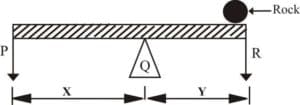
Question 10
Question 11
Question 12
Question 13
Question 14
Question 15
Question 16
Question 17
Question 18
Question 19
Question 20
Question 21
Question 22
Question 23
Question 24
Question 25
Question 26
Question 27
Question 28
Question 29
Question 30
Question 31
Question 32
Question 33
Question 34
Question 35
Question 36
Question 37
Question 38
Question 39
Question 40
THEORY
ESSAY
Answer three questions only from this section. Illustrate your answers wherever possible, with large, clear and fully labelled diagrams. Credit will be given for clarity of expression and orderly presentation of material. All questions carry equal marks
Question 1
(a) (i) What is surface tension? (ii) Name two household devices that make use of surface tension (iii) Explain how the principle of surface tension operates in one of the devices you have named b) (i) What is constipation? (ii) State four ways by which constipation can be prevented c) A block of mass 10kg is suspended from a spring. Calculate the force acting on the block. [g = 10ms-2] d) An amount of sodium hydroxide solution was put into a beaker and a piece of litmus paper was added. Dilute hydrochloric acid was added a little at a time with stirring until the litmus paper just turned purple. The resulting solution was evaporated to dryness. (i) What was the colour of the litmus paper in the sodium hydroxide solution? (ii) What does the colour change of the litmus paper indicate? (iii) What substance was left after the evaporation? (iv) Write a balanced equation for the reaction that took place.
Question 2
a) State and explain three ways by which plants protect themselves from danger b) (i) What is an anion? (ii) Give the names of the products formed when the following pairs of compounds react together: α) NH4OH and dilute HCL β) CaCO3 and dilute HCL c) (i) What is electromagnetism? (ii) With the aid of a circuit diagram describe how a piece of metal can be magnetized
Question 3
a) (i) State three characteristics of roots (ii) two functions of roots b) State two conditions necessary for the germination of seeds c) Describe briefly how the volume of an irregular shaped metal ball could be determined d) Write down the chemical formula for each of the following compounds: (i) sodium chloride (ii) copper sulphate (iii) magnesium sulphate (iv) potassium carbonate e) State the method that could be used to separate each of the following compounds: (i) iodine and sand (ii) ethanol and water
Question 4
a) (i) What is digestion? (ii) Describe briefly how food is digested in the stomach b) (i) What is meant by eclipse of the sun? (ii) With the aid of a labelled diagram, distinguish between total eclipse and partial eclipse. c) (i) State the difference between a physical change and a chemical change (ii) Give one example of each of a physical change and a chemical change
PART I [40 marks]
Answer all of Question 1
Questions for this section are in the printed paper.