THE WEST AFRICAN EXAMINATIONS COUNCIL GHANA
Basic Education Certificate Examination
Integrated Science 2010
OBJECTIVE TEST
Objective Test
Question 1
Water that forms lather readily with soap is said to be
Question 2
Which of the following life activities are common to both plants and animals?
Question 3
A suitable instrument that could be used to measure the internal diameter of a bamboo flute is
Question 4
The ability of soils to supply the right amounts of essential nutrients to plants is known as
Question 5
The simplest way of making well water suitable for laundry purpose is by
Question 6
Washing down of soil nutrients beyond the reach of roots of plants is referred to as
Question 7
Which of the following statements explain(s) why an object floats in water? A floating object
Question 8
An example of leafy vegetable crops is
Question 9
The structure in the respiratory system of humans where gaseous exchange occurs is
Question 10
The gas produced when glucose is oxidized during internal respiration is
Question 11
The farm animal which has crop as part of its digestive system is the
Question 12
A beneficial effect of wind on the environment is
Question 13
The chemical solution that can be used to test for the presence of protein in food substances is
Question 14
Which of the following statements about bush fires is/are true?
Question 15
The most effective method of controlling soil erosion on steep slopes is
Question 16
Which of the following agencies is responsible for providing information on the weather and climate conditions of an area?
Question 17
The farming system which involves the growing of one type of crop on the same piece of land every season is known as
Question 18
The fifth planet from the sun in the solar system is
Question 19
The process that takes place when the sperm and the egg of humans fuse together is referred to as
Question 20
The process by which water vapour moves through the stomata of leaves into the atmosphere is known as
Question 21
An example of intensive system of poultry keeping is the
Question 22
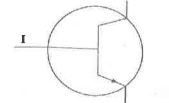
The diagram below represents a circuit symbol in an electronic device. Study it carefully and use it to answer the question below.
The symbol represents
Question 23
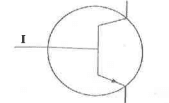
The diagram below represents a circuit symbol in an electronic device. Study it carefully and use it to answer the question below.
The part of the diagram labelled I has
Question 24
A spot made on a white paper with a given food substance turned the spot on the paper translucent. The food substance is likely to contain
Question 25
Which of the following sources of energy is non-renewable?
Question 26
Which of the following farm animals is/are housed in a hutch?
Question 27
Which of the following blood vessels carries deoxygenated blood?
Question 28
The energy transformation that takes place in a car battery is
Question 29
The type of liquid suitable to construct a thermometer to read temperatures of about 150°C is
Question 30
Amino acids are the end-products of the digestion of
Question 31
The type of teeth used by mammals to eat food materials is
Question 32
Fishponds are often stocked using
Question 33
Which of the following processes result(s) in the formation of a new substance?
Question 34
The use of resistance breeds of farm animals in controlling diseases is a
Question 35
A load of 10 N is moved through a distance of 2 m. Calculate the work done.
Question 36
Which of the following components of human blood is dissolved in the plasma?
Question 37
An atom of carbon is represented as 612C. How many neutrons are in the nucleus of the carbon atom?
Question 38
In agribusiness, middlemen operate within the
Question 39
Which of the following illustrations shows the correct direction of the lines of force around a bar magnet?
Question 40
The human sex cells are produced in the
THEORY
ESSAY
This paper is in two parts: I and II. Answer Question 1 in part I and any other four question in part II
Question 1

- The diagram below is used to demonstrate an activity in the laboratory. Study it carefully and use it to answer the questions that follow: What does the diagram represent? Identify the components labelled, D, E, K and P in the diagram. State one function each of the parts labelled, D, E, K and P. Mention the energy transformation that occurs in E in the diagram when K is closed.
- In an experiment, red and blue litmus papers were dipped separately into three test tubes containing one of the test substances listed in the table below. Copy and complete the table by making the necessary observation and conclusion for each substance. Name two of the test substances that would react with each other to produce salt and water. Write down a balanced chemical equation for the reaction in (ii) above.
- The diagram below is an illustration of the human digestive system. Study it carefully and use it to answer the questions that follow: Name the parts labelled I, II, III and IV. State one function of each of the parts labelled V and VI. Name the part where the digestion of protein starts. Identify the part where (α) absorption of end-products of digestion takes place. (β) re-absorption of water takes place. (γ) egestion takes place.
- The diagram below is an illustration of a simple farm tool. Study it carefully and use it to answer the questions that follow: Identify the tool. State three uses of the tool. Mention three ways of maintaining the tool.
PART I [40 marks]
Answer all of Question 1
Questions for this section are in the printed paper.
PART II [60 marks]
Answer all of Question 1
Question 1
- What is neutralization reaction? Write a balanced chemical equation for the reaction between each of the following pairs of substances: (α) Sodium metal and dilute hydrochloric acid (β) Sodium hydroxide and dilute hydrochloric acid
- Explain weaning as used in animal production.
- What is a Milky Way? State one use of artificial satellites.
- What is a habitat? Give two examples of a habitat.
Question 2
- Define Pressure. Explain why it is important to sharpen a knife before use.
- State two differences between metals and non-metals. What is an alloy? Mention the components of each of the following alloys: (α) Steel (β) Brass
- Mention three conditions suitable for rearing tilapia in a fishpond.
- Explain how the streamlined body of a bony fish enables it to live successfully in water.
Question 3
- What is a disease vector? Mention two methods of controlling each of the following types of pests of farm animals: (α) ectoparasites; (β) endoparasites.
- State two symptoms of nitrogen deficiency in a tomato plant. Describe side dressing as a method of fertilizer application.
- Define power State the S.I unit of power
- Draw the electronic structure of potassium [Atomic number of potassium = 19]
Question 4
- What is respiration? Name the types of respiration that occur in humans.
- List three ways of maintaining soil fertility.
- Write the systematic name of each of the following chemical compounds: (α) FeS; (β) SO2; (γ) CO2. Give one reason why copper, silver, and gold are mostly used in making ornaments and jewellery.
- What is a fuse? Explain why a fuse is used in an electrical circuit.
Question 5
- What is the difference between unicellular organism and multicellular organism? State two reasons why vegetable crops are important to humans.
- State two elements of climate. What is the difference between climate and weather?
- Mention three advantages of staking in crop production.
- Explain each of the following processes: corrosion; sublimation.